


Hokm سلطان حکم: پاسور بازی
4.61.08K Reviews
App Specs
- Version
- 1.11
- Updated On
- License
- Free
- Downloads
- 5,000,000+
- Developer
- Peyto Games
- Categories
- Card
- Platform
- Android, iOS
Screenshots

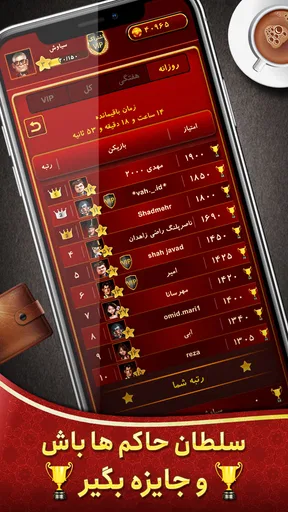

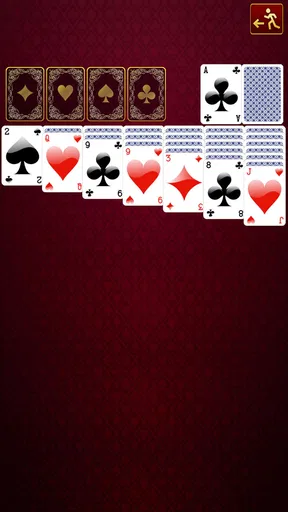
 Analysis by AppCompare
I spent time with Hokm سلطان حکم: پاسور بازی as a casual card game, and my first impression was that it is built around the simple appeal of a traditional trick-taking match rather than a complicated collection of modes. The Persian presentation gives it a clear identity, while the built-in chat makes each table feel more social than a purely offline card game. If you already enjoy Hokm, or want a focused way to play it on a phone, this is an easy game to understand and start using.
It is a free card game from Peyto Games, rated for Everyone, with a current version of 1.11 and support beginning with Android 7.0. The game has reached over five million installs and holds an average rating of 4.6 from around eighty-five thousand ratings, which suggests that it has found a substantial audience. Those figures do not automatically guarantee a perfect experience, but they do make it feel like an established choice rather than an obscure card title that may be abandoned after installation.
How the game feels during ordinary play
The central attraction is the rhythm of a Hokm match: choose your play carefully, follow the suit when required, and try to read the table rather than relying only on the strength of one card. That structure gives every hand a small amount of tension. A weak-looking hand can still become useful if I save the right card, while an apparently strong hand can disappear quickly after a poor decision.
What I like about this format is that it does not ask me to learn a long list of special abilities or manage a large collection before I can enjoy a round. The focus stays on the cards and on the decisions made during the hand. That makes it suitable for short breaks, especially when I want something more thoughtful than a quick matching game but less demanding than a full strategy title.
The Persian language and cultural setting are important here. Players who already know Hokm will understand the flow naturally, while newcomers may need a little time to become comfortable with the rules and terminology. I would not choose this as the easiest card game for someone who has never played a trick-taking game, but it becomes much more approachable once the basic logic of suits, trump selection, and winning tricks is familiar.
Speed expectations before you start
My expectation for this game is quick access to the card table, not a visually elaborate experience. Its appeal comes from the match itself, so the interface does not need to spend time presenting complex animations or a large world. That focused design is useful on a phone because I can open it with a specific purpose: play a few hands, chat at the table, and leave.
Perceived speed matters more in a card game than raw visual polish. A delayed card action can make me wonder whether my tap registered, especially when the next move depends on timing. In normal use, the game feels best when I treat it as a turn-based activity rather than expecting the instant response of an arcade game. The slower pace also gives me time to think, which is a benefit when the table is competitive.
Worth Reading Before You Choose

EA SPORTS FC Mobile 26 Is a Bigger Football Game, but It Takes Time

Flipboard Shows What News Apps Must Do Beyond the Feed

Switching to Android Auto Means Rethinking Your Driving Routine

Google Calendar Makes a Crowded Week Easier to Manage

Ludo King Makes the Most of the Minutes Between Plans

Baby Panda World Brings Quick Play to Modern Phones, but Its Game Library Feels Busy
There is a practical trade-off between a compact, focused card experience and a feature-heavy game. A larger game might offer more visual feedback, tutorials, or alternate modes, but it would also require more loading and more attention. Hokm’s narrower purpose is one of its strengths for people who want a familiar card session without carrying a much bigger game around.
What happens during longer or busier sessions
The heaviest moments are likely to come from the combination of an active match, chat, and repeated rounds rather than from complicated graphics. When I play for longer, I pay more attention to whether the table remains understandable: whose turn it is, which cards have been played, and whether a message distracts from the decision in front of me. In a social card game, clarity is more valuable than decoration.
Chat changes the mood of a match. It can make a quiet game feel like a shared table, which is especially useful when I want interaction instead of playing against a silent opponent. At the same time, chat can interrupt concentration. My practical advice is to treat conversation as an extra layer, not as something that must be followed constantly. If I am trying to improve my decisions, I focus on the cards first and use chat between important turns.
Long sessions also reveal whether the game suits the way you play. Someone who enjoys studying every hand may appreciate the extra time and social element. Someone looking for rapid rounds may find the pauses, messages, or turn-based rhythm less satisfying than a faster solitaire-style alternative. This is not a flaw in the concept, but it is an important difference when choosing between card games.
Reliability and recovering from interruptions
A mobile card game has to fit around real life. Calls, notifications, a weak connection, or simply locking the screen can interrupt a match without warning. I therefore judge Hokm less by whether every session is perfectly uninterrupted and more by how easy it is to return to the table without losing track of the hand.
The most useful habit is to avoid starting a serious match when I know I may need to leave the phone repeatedly. A trick-taking game depends on the sequence of turns, so stepping away at the wrong moment can affect both my own experience and the other players’ rhythm. For a quick, casual session, that risk is manageable. For a focused competitive session, I prefer to begin when I can give the game several uninterrupted minutes.
Recovery is also a matter of memory. Before leaving the app, I try to note the current suit, the cards already played, and whether I was waiting for another player. That small mental snapshot helps me re-enter the match with less confusion. It is a particularly useful approach for Hokm because the value of a card depends heavily on what has already appeared, not just on the card itself.
I would describe the game as a better fit for stable, attentive play than for constant stop-and-start use. That does not mean every interruption will cause trouble, but the structure of a live card table naturally makes interruptions more noticeable than they would be in a solo puzzle. If you need a game that can be abandoned at any second with no effect, a conventional offline solitaire title is the safer choice.
Android requirements and device considerations
Support for Android 7.0 gives the game access to a broad range of phones, including devices that are not recent. That is helpful for players who keep an older handset as a secondary phone or who do not want a demanding modern game. The card-focused format also suggests a lighter everyday workload than a large three-dimensional game, although I still prefer to keep enough free storage and close unrelated apps when my phone is already struggling.
On a modest device, the important questions are not advanced graphics settings but responsiveness, readable cards, and whether the phone can remain connected during a match. A smaller screen may make card details and chat less comfortable, especially if you are trying to follow both at once. I find that landscape or portrait preference matters less than having enough display space to see the table without rushing.
Battery demand is likely to be easier to tolerate than with a graphics-heavy action game because the experience is centered on cards and turns. Still, a long session with an active connection and chat can be more demanding than opening a simple offline deck. If I am traveling, I would start with a reasonable charge and avoid assuming that a social online-style session will have the same battery impact as a few minutes of solitaire.
For older phones, I would also keep expectations realistic. Android compatibility means the game can be installed on a wide range of devices, but compatibility alone does not make every phone equally comfortable. A phone with a responsive touch screen and a clear display will make more difference to the experience than chasing the newest hardware.
Small decisions that improve the experience
One useful approach is to separate learning from winning. During the first few matches, I pay attention to the order of cards and to how the trump suit changes the value of ordinary cards. Trying to maximize every hand immediately can make the game feel harsher than it needs to be. Once the basic flow becomes familiar, I can start noticing patterns in my own mistakes instead of blaming unlucky cards.
A second tip is to remember played cards by suit rather than trying to memorize the entire deck. I find it easier to ask myself which high cards are still possible in the current suit and whether an opponent may be void in that suit. This turns the game from simple guessing into manageable observation, without requiring a written score sheet or complicated tracking system.
Chat is most useful when it supports the social side of the match rather than replacing it. I prefer short messages that acknowledge a good play or keep the table friendly. If conversation becomes distracting, I mentally separate the two tasks: make the card decision first, then read or send messages when the turn has moved on. That small change keeps the game from feeling noisy.
Another practical trade-off concerns spending. The game is free to install, but in-app purchases range from forty-nine cents to ninety-nine dollars and ninety-nine cents per item. I would treat those purchases as optional extras and decide in advance whether I want to spend anything at all. The core appeal for me is the card play, so I would not install it expecting that payment is necessary to understand or enjoy the basic experience.
Who will enjoy it, and who should skip it
This is a strong match for players who already know Hokm, enjoy Persian card culture, or want a social card table with chat. It is also suitable for someone who likes games where careful observation matters more than fast reflexes. The free entry point makes it easy to try, and the Everyone rating means it is presented as a broadly accessible game rather than a title aimed at mature audiences.
I would recommend it to a friend who wants a repeatable game for evenings with short gaps between other tasks. For example, after dinner I might play a few hands while chatting with friends, then stop when the conversation moves elsewhere. The game works well in that setting because each match has a clear structure, but it still offers enough decision-making to avoid feeling like a completely automatic pastime.
I would be more cautious about recommending it to someone who wants a fully offline experience, a rich single-player campaign, or fast action. The social card-table format is the point, so players who dislike chat, waiting for turns, or reading opponents will probably prefer a solo card app. Likewise, a person unfamiliar with Hokm may need patience before the game feels intuitive.
How it compares with familiar card alternatives
Compared with solitaire, this game offers more social tension and more room to learn from other players, but it is less flexible when you only have a few seconds. Solitaire lets me pause, restart, or play without considering anyone else’s turn. Hokm is better when I want a shared contest and worse when I need a completely private, interruption-proof activity.
Compared with broad card-game collections, Hokm feels more specialized. A collection may provide poker, rummy, solitaire, and several other formats in one download, while this game puts its identity behind one particular style of play. That specialization is valuable if Hokm is what I came for, but it may feel limiting if I want to switch games whenever I lose interest.
Compared with a physical deck, the phone version removes setup, shuffling, and the need to find three other people in the same room. It also adds chat and the convenience of carrying the table in a pocket. The physical version still wins for face-to-face conversation and complete control over the pace. I see the mobile version as a practical extension of the game, not a total replacement for sitting around a real table.
Version, cost, and the overall performance verdict
The current version is 1.11, and the game remains free to download. That combination makes the decision simple: install it if the rules and Persian card setting appeal to you, then judge the experience on your own phone rather than assuming that popularity alone guarantees a perfect fit. The large install base and strong average rating are encouraging, but neither removes the personal question of whether you enjoy this particular style of match.
My performance verdict is positive for the intended use. Hokm is not trying to be a demanding visual showcase; it is a focused card game where speed means getting to the table smoothly, stability means keeping the match understandable, and resource use should remain more comfortable than in a large action game. I would still reserve longer sessions for a stable connection and a phone with enough battery, especially when chat is part of the experience.
The main limitation is not a lack of ambition but the narrowness of the format. If you want Hokm, that focus is exactly why the game is appealing. If you want a huge selection of modes, uninterrupted solo play, or a game designed around rapid reactions, another card app will serve you better. I also would not spend money casually simply because optional purchases are available; the free starting point is enough to decide whether the table suits you.
Overall, I see Hokm سلطان حکم: پاسور بازی as a sensible choice for players who want a Persian-flavored, social trick-taking game that can live on an older Android phone and still offer meaningful decisions. Its best moments come from reading the hand, remembering what has disappeared, and balancing concentration with conversation. The real strength is its focused table experience, not a long list of distractions. If that is what you are looking for, Peyto Games has made a game worth trying; if not, a quieter offline card alternative will probably be a better companion.
Pros
- Classic Hokm rules are easy to learn for new card-game players.
- Quick matches make it convenient for short gaming sessions.
- Online play adds variety through competition with other players.
- Simple card-game format works well on most modern smartphones.
- Familiar Persian interface can feel comfortable for local players.
Cons
- A stable internet connection may be required for online matches.
- Matchmaking quality can vary depending on the time and player pool.
- Ads may interrupt play or appear frequently between rounds.
- Limited appeal for users unfamiliar with Persian card-game culture.
- Some features may require in-app purchases or additional rewards.
FAQs for Hokm سلطان حکم: پاسور بازی
What is Hokm سلطان حکم: پاسور بازی and how is it played?
Hokm سلطان حکم: پاسور بازی is a digital version of the popular Persian trick-taking card game Hokm. Players compete in teams, usually two against two, and one player becomes the “hokm” caller who selects the trump suit. Each round requires players to follow the led suit when possible, while the trump suit can win over other cards. The team that captures the required number of tricks wins the hand.
Can I play Hokm سلطان حکم: پاسور بازی offline?
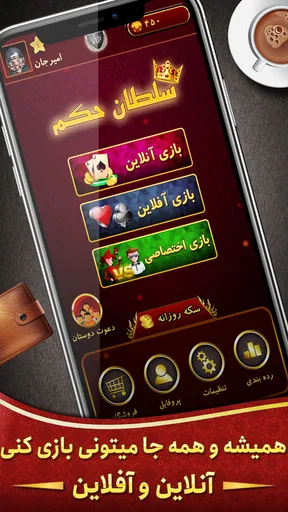
The game may support offline play against computer-controlled opponents, which is useful when you do not have an internet connection or simply want to practice. However, online features such as multiplayer matches, rankings, invitations, or competitive modes may require an active connection. Before downloading, check the app’s current store description because available modes can vary between updates and Android or iOS versions.
Does the game support multiplayer with friends?
Hokm سلطان حکم: پاسور بازی is designed around competitive card play and may include options for playing with friends or other users, depending on the version installed. Multiplayer availability can involve private rooms, online matchmaking, or local play. Some features may require account access, advertisements, or a stable connection, so reviewing the in-game menu after installation is recommended before inviting others.
Is Hokm سلطان حکم: پاسور بازی suitable for beginners?
Beginners can learn the game, especially if they already understand basic card games or Persian Hokm rules. The main challenge is learning when to play high cards, how to remember discarded suits, and how to cooperate with a partner. A practice mode against computer opponents can make the learning process easier. New players should also check whether the app provides tutorials or rule explanations.
Does Hokm سلطان حکم: پاسور بازی contain ads or in-app purchases?
Many free mobile card games use advertising to support development, and some may offer optional purchases for removing ads, obtaining virtual coins, or unlocking additional features. The exact monetization system can change with updates and may differ by platform or region. Check the Google Play Store or Apple App Store listing for the latest information about ads, purchases, privacy details, and age recommendations before downloading.


